
Home › AI SEO Add-Ons › Buyer Persona Blueprint
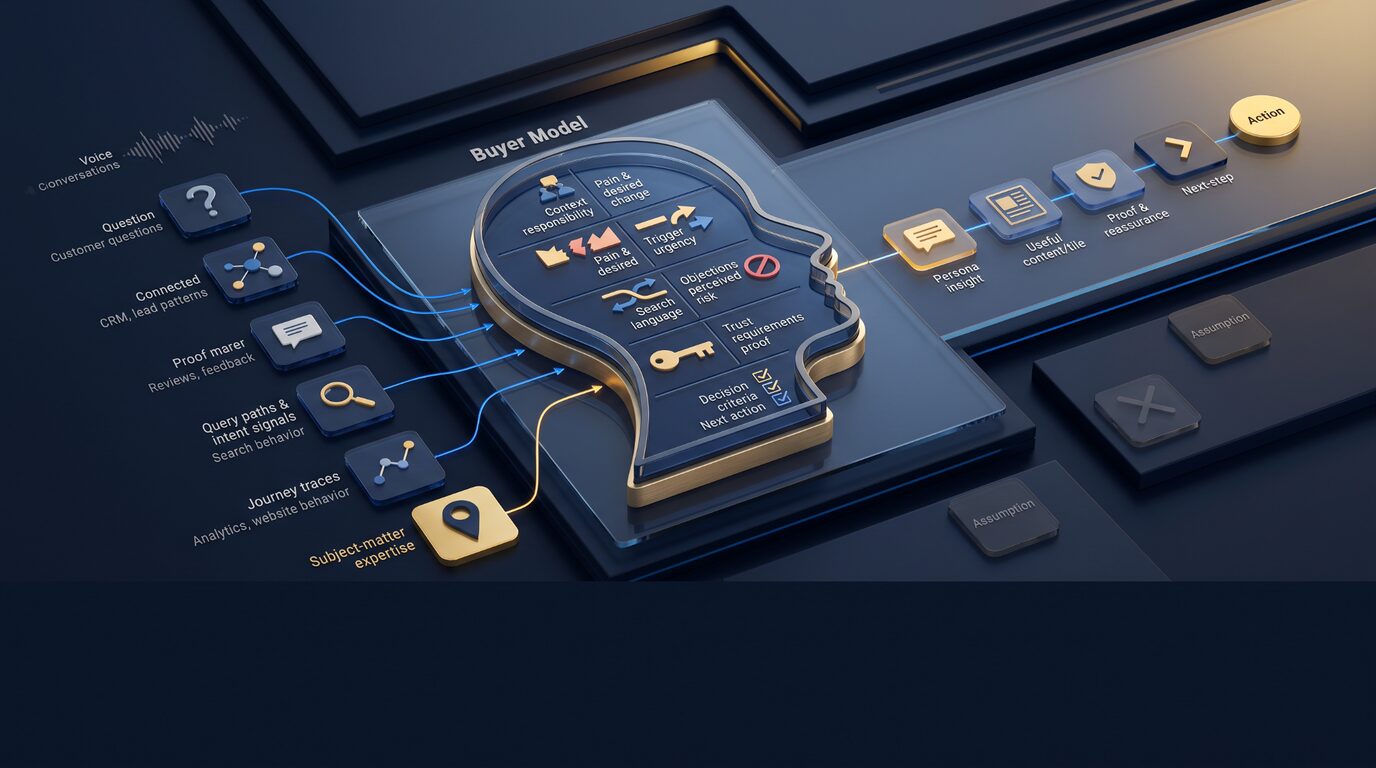

Know the buyer before writing the content
Shaun connects buyer evidence to messaging, content priorities, trust signals, and the next decision.
Buyer Persona Research for Search and Content
A Buyer Persona Blueprint That Gives Your Content Someone to Persuade
Before you decide what to say, know who needs to hear it. ClickIt CMO turns customer evidence into a practical persona strategy that helps content address real pain points, answer objections, earn trust, and support a purchase decision across Google and AI search.
DIGITALMARKETER TRAINING
Customer Acquisition Specialist
CUSTOMER VALUE TRAINING
Customer Value Optimization Specialist
NICHOLAS IBELLO’S RECOMMENDATION
Understands his business and the clients it serves
The Short Answer
What is a Buyer Persona?
A buyer persona is an evidence-based model of a customer segment that captures the context, problems, triggers, questions, objections, trust requirements, and decision criteria shaping a purchase.
This is not an AI-generated character profile.
Research tools may help organize evidence, but Shaun evaluates the patterns, tests them against the business, separates useful signals from assumptions, and turns the findings into practical marketing decisions.
Pain
Understand what the buyer wants to change, what the status quo costs, and what creates urgency.
Trust
Know which objections, risks, proof points, and experiences shape credibility.
Decision
Map the questions and next steps that move a buyer from awareness to action.
The Real Problem
Generic Content Fails Because It is Written to Everyone
Keywords can reveal demand, but they do not tell you which buyer is asking, what that person already believes, what is creating hesitation, or what evidence would make the next step feel safer.
Speak to a specific problem instead of a broad market category.
Address the objection before it becomes a reason to leave.
Use proof that matters to the buyer, not just proof that is easy to publish.
Answer the next question in the decision journey, not a random topic.
1
Who is making the decision?
Role, context, responsibility, influence, and business reality.
2
What are they trying to change?
Pain points, desired outcomes, urgency, and the cost of staying still.
3
What is creating hesitation?
Objections, tradeoffs, prior experiences, internal risk, and unanswered questions.
4
What will they believe?
Evidence, expertise, examples, reviews, comparisons, and direct experience.
5
What decision comes next?
The content, action, or conversation that moves the journey forward.
“If we do not know who we are talking to, how can we ever know what to say to them?”
Shaun Wilson, ClickIt CMO
People-First Search Strategy
Better Audience Understanding Creates Better Answers
Google and AI answer systems do not need a fictional persona card. People need content that understands their situation, provides useful evidence, and answers the real question behind the query.
1
Context
Connect the query to the buyer’s role, situation, goal, and stage instead of treating every search as identical.
2
Language
Use the questions, terms, objections, and decision language customers actually use.
3
Evidence
Pair claims with first-hand experience, examples, proof, and expertise that support trust.
4
Path
Give each page a clear job in the buyer journey and a useful next step.
Google recommends creating helpful, reliable, people-first content for an existing or intended audience. Its current generative AI guidance also emphasizes unique, non-commodity content grounded in experience. Sources: Google Search Central on people-first content and Google’s guide to generative AI search features.
Decision-Ready Outcomes
What the Blueprint Helps Your Team Do
The scope is shaped around the business. The goal is not a decorative persona deck. It is a shared decision system for content, search visibility, trust, and conversion.
1
Prioritize the right audience
Distinguish the people who influence revenue from broad groups that are interesting but not actionable.
2
Map pains, triggers, and desired outcomes
Clarify what the buyer wants to change, what creates urgency, and what success means in their terms.
3
Document questions by buyer stage
Organize awareness, consideration, comparison, and decision questions into a usable journey.
4
Address objections and trust gaps
Identify the proof, experience, explanation, and reassurance required before a buyer will act.
5
Give content clearer jobs
Connect buyer needs to page ownership, topic priorities, search intent, internal links, and conversion paths.
6
Write briefs people can use
Translate the strategy into language, angles, questions, proof points, and calls to action that guide production.
Evidence Before Assumptions
Useful Personas are Built From Real Signals
The strongest evidence usually combines what the business knows directly with what buyers reveal through search, reviews, conversations, and behavior.
First-Party Business Evidence
- Sales conversations, call notes, and common objections
- CRM patterns, lead quality, wins, losses, and stalled opportunities
- Form submissions, site search, support questions, and customer feedback
- Analytics, Search Console, conversion paths, and important page behavior
- Founder and subject-matter expertise that explains the market reality
Search and Market Evidence
- Keyword demand, question patterns, and search intent
- Google results, related searches, and People Also Ask patterns
- Public reviews, relevant discussions, and buyer language
- Competitor positioning, content gaps, and repeated category claims
- AI answer patterns treated as emerging evidence, not guaranteed demand
Clear distinction: Tools may collect and organize information. Shaun decides what is credible, what is relevant, what still needs validation, and how the evidence should change marketing decisions.
How the Work Moves
From Customer Evidence to Better Content Decisions
Research, interpretation, prioritization, and activation stay connected so the persona does not become a forgotten file.
1
Listen
Understand the business, customers, sales process, economics, existing evidence, and definition of a useful outcome.
2
Gather
Review first-party evidence, buyer questions, search demand, reviews, market language, and relevant public discussions.
3
Interpret
Separate patterns from assumptions, identify gaps, map pain and trust, and prioritize the persona insights that change decisions.
4
Activate
Connect the findings to messaging, content briefs, page roles, objections, evidence, internal links, and conversion paths.
Fit Before Scope
When Buyer Persona Strategy Makes Business Sense
A persona is most useful when the business is ready to make different decisions for a defined audience and contribute real customer knowledge.
A strong fit when you have:
- Content that sounds accurate but still feels generic
- Several audiences competing for attention and resources
- Sales and marketing using different definitions of the buyer
- A new offer, redesign, market shift, or stalled content program
- A need to make SEO and AI-search content more specific and useful
More preparation may be needed when:
- No one can provide access to customer, sales, or market evidence
- The expectation is a fictional demographic profile built from guesses
- The business wants dozens of personas without a priority decision
- No one has the authority or capacity to act on the findings
- The expectation is guaranteed rankings, traffic, citations, or revenue

Senior Strategy, Direct Access
You Get Shaun, Not an Automated Persona Factory
Shaun personally reviews the evidence, asks the business questions, identifies the patterns that matter, and connects the buyer insight to practical search, content, and conversion decisions.
That matters because a persona is only valuable when it changes what the team says, proves, creates, prioritizes, and measures.
15+
years of digital marketing experience
28
certifications and licenses
Direct
access to the strategist
Questions Buyers Ask
Buyer Persona Strategy FAQs
Clear answers about research, SEO, AI search, demographics, updates, and how a persona becomes usable marketing guidance.
What is a buyer persona?
A buyer persona is an evidence-based model of a customer segment. A useful persona explains context, goals, pain points, triggers, questions, objections, trust requirements, decision criteria, and the next steps that shape a purchase.
How is a buyer persona different from a target audience?
A target audience defines the broader group a business wants to reach. A buyer persona adds decision context by explaining why a specific segment acts, what it needs to believe, which questions it asks, and what may stop it from moving forward.
Is the buyer persona blueprint generated by AI?
No. Tools may help collect, organize, or summarize evidence, but Shaun evaluates the sources, separates patterns from assumptions, adds business context, identifies gaps, and makes the strategic decisions. The finished work is human-led and business-specific.
How do buyer personas improve SEO content?
Buyer personas help connect keyword demand to a real audience, problem, stage, objection, proof requirement, and next action. That makes it easier to assign each page a clear purpose and create content that answers the right question for the right buyer.
Can buyer personas help with Google AI Overviews and other AI answer systems?
They can improve the usefulness and specificity of the source content those systems may evaluate. A persona does not guarantee inclusion or citation. It helps teams create clearer, people-first, evidence-backed answers tied to real buyer questions and context.
What information is used to build a buyer persona?
The evidence can include sales conversations, CRM notes, support questions, customer feedback, form submissions, reviews, analytics, Search Console, keyword research, public discussions, competitor positioning, and subject-matter expertise. The mix depends on access, relevance, and the business decision the persona must support.
Should a buyer persona include demographics?
Only when demographics meaningfully affect the need, decision, channel, message, or buying context. Decorative details such as fictional hobbies or arbitrary ages do not make a persona useful. The focus stays on information that changes a marketing decision.
How many buyer personas should a business have?
As few as the business can use well. Each persona should represent a meaningfully different decision context, pain, buying process, or trust requirement. Creating more personas than the team can activate usually adds complexity without improving results.
What happens after the buyer persona is built?
The findings can guide positioning, content strategy, page ownership, briefs, FAQs, proof selection, calls to action, sales enablement, internal links, and measurement. The persona should be reviewed as customer evidence, the market, and the offer change.
Start With the Buyer
Know Who You Need to Persuade Before Deciding What to Say
Tell Shaun who you sell to, where the current message feels generic, which objections slow the decision, and what your content needs to accomplish.