
Home › Search Optimization Services › AI Citation Optimization
AI Citation Optimization for Growth-Minded Businesses
Turn High-Value Buyer Questions Into AI Citation Opportunities
When buyers ask ChatGPT, Google AI Mode, Perplexity, Copilot, or another answer system which company to trust, the response may cite a competitor or leave your business out entirely. The AI Citation Optimization Sprint™ finds the commercially important questions where that happens, maps each gap to the page that should own the answer, improves a focused set of canonical pages, and measures what changes.
It is a founder-led implementation sprint. It is not a visibility score and not a promise that a third-party system will cite you.

Founder-led implementation and measurement
UVA DARDEN TRAINING
Content Marketing Using Generative AI
DIGITALMARKETER TRAINING
Content Marketing Specialist
MEASURABLE PROCESS
Documented page changes and prompt retesting
20 to 30
Buyer prompts
Top five
Opportunities
Up to five
Canonical pages
30 and 90
Day retests
Standard scope. Final prompt and page counts are confirmed after the fit review.
The problem
Knowing You Are Missing From AI Answers Is Not the Same as Knowing What to Fix
A visibility dashboard can show that your brand appears rarely or not at all. It may even show which competitors are cited. That is useful evidence, but it does not tell you which buyer questions deserve attention, which page should own each answer, or what is actually preventing your business from being used as a source.
The cause changes the response
The gap may be a missing answer, weak proof, unclear entity information, buried content, a technical access problem, a poor page match, or stronger third-party authority elsewhere. Each cause requires a different response.
What undisciplined AI optimization looks like
Publishing more content without a defined buyer question or canonical page owner.
Rewriting pages for AI systems instead of making them more useful to people.
Adding schema or llms.txt and calling the technical task a strategy.
Reporting one model response as a stable ranking or share of voice.
Changing public claims without source verification or approval.
The short answer
What Is AI Citation Optimization?
The Sprint does not optimize an AI model. It improves the public web evidence, page clarity, technical accessibility, and conversion path your business controls.
AI citation optimization is the work of strengthening the public, indexable pages and evidence that AI-assisted search systems can use when answering buyer questions.ClickIt CMO tests a fixed set of high-value prompts, identifies where your brand is absent, weak, inaccurate, or uncited, maps each opportunity to the canonical page best equipped to answer it, implements approved improvements, and retests the same prompts under comparable conditions.You receive an AI Citation Opportunity Map, documented page changes, quality assurance, and 30-day and 90-day measurement. You do not receive a black-box score or a guarantee of inclusion.
Choose the right starting point
Audit First. Optimize Next. Keep Only What Earns Its Place.
Diagnose
AI Visibility Audit
Choose the Audit when you need to understand how AI search systems discover, interpret, represent, cite, or overlook the business and what to fix first. The outcome is a benchmark and prioritized roadmap.
Implement
AI Citation Optimization Sprint™
Choose the Sprint when the opportunity is credible and you want a focused set of buyer questions mapped to canonical pages, improved with approved content and technical changes, and retested under comparable conditions.
Continue
Ongoing AI Search Optimization
Choose ongoing support when monitoring, authority development, new prompt opportunities, or repeated implementation work continues after the first priorities are complete.
Not sure where to begin? Request a Citation Opportunity Review and we will determine whether the Audit or the Sprint is the better first step.
A controlled implementation loop
From Buyer Question to Stronger Canonical Answer
The prompt, page, evidence, change, and result stay connected from beginning to end.
1
Find
Build a fixed panel of commercially important buyer prompts using offers, sales questions, keyword demand, competitive evidence, analytics, and approved strategy. At least 75% of the standard panel is non-branded.
2
Diagnose
Document whether the brand is absent, mentioned, cited, represented accurately, or outranked. Diagnose the likely gap across question fit, proof, entity clarity, structure, access, authority, page ownership, or conversion alignment.
3
Improve
Map each approved opportunity to the canonical page best able to own the answer. Improve direct answers, verified proof, headings, internal links, sources, schema, technical access, and buyer-stage next steps.
4
Prove
Preserve the before state, implement approved changes, complete desktop, mobile, technical, schema, link, and conversion QA, then retest the same prompt panel at 30 and 90 days.
Clear outputs
What You Receive
Every deliverable is tied to a buyer question, a canonical page, and a documented decision.
1
Versioned Prompt Panel
A fixed panel grounded in buyer and search demand, plus a timestamped baseline across at least two accessible AI search experiences when practical.
2
Opportunity Map
An AI Citation Opportunity Map that separates high-value priorities from the strategic backlog and documents competitor and source patterns.
3
Page-Level Briefs
One implementation brief for each approved canonical page, including the question, likely gap, evidence needs, and intended buyer action.
4
Approved Improvements
On-page, internal-link, technical, schema, and conversion improvements for up to five pages in the standard Sprint.
5
Change Record and QA
A before and after change record, quality-assurance checklist, and rollback information.
6
30-Day and 90-Day Retests
Comparable retests with findings, limitations, and recommended next steps.
Human usefulness first
We Improve the Evidence You Control
The strongest opportunities are rarely solved by one generic rewrite. ClickIt CMO improves the combination of answer clarity, proof, entity information, page ownership, crawlability, authority signals, and conversion path that the buyer and any search system using the page can evaluate.
Typical page improvements
A visible 60 to 100 word answer near the top when the question warrants it.
Verified facts, examples, experience, tradeoffs, limitations, and first-party proof.
Clear service, company, author, reviewer, location, and relationship language.
Headings and sections that make the answer easy to understand.
Structure and next steps
Internal links that establish page ownership and move the buyer forward.
Accurate titles, descriptions, canonicals, crawl controls, and structured data.
A call to action matched to the buyer's stage instead of a generic request.
Every change must improve the human page even if no AI system ever cites it.
Responsible implementation
What We Will Not Do to Chase an AI Citation
The goal is not to manipulate an answer engine. The goal is to make your business a clearer, more useful, more verifiable source for the questions that matter.
No invented outcomes
No promises of a mention, citation, ranking, recommendation, traffic increase, or lead.
No machine-only tactics
No hidden instructions, cloaked content, mass prompt variations, or fabricated proof.
No shortcut theater
No unsupported schema, llms.txt shortcut claims, or special AI schema sold as a visibility strategy.
No brand dilution
No generic AI copy replacing your brand voice, and no live public change without approved wording and URL-specific authorization.
Evidence with limitations
How the Sprint Is Measured
AI answers can vary by platform, model, search mode, account state, location, time, and run. Every output is treated as a timestamped observation, and the same fixed prompt panel is tested under documented conditions.
Visibility status
Brand mention, owned citation, and third-party citation remain separate.
Source patterns
Cited URL or domain, source order, and recurring competitors.
Answer quality
Accuracy, context, unsupported claims, and material omissions.
Repeatability
Repeated runs for high-priority prompts when practical.
Referral evidence
ChatGPT referrals and available Google or Bing generative search performance.
Business outcomes
Organic performance and qualified conversions when access and data are available.
A mention is not automatically a citation. A citation is not automatically a referral. A referral is not automatically a qualified lead. Reporting keeps those outcomes separate.
Fit before implementation
Built for Businesses With Something Real to Prove
A strong fit when
Your offer and website support a focused implementation.
Buyer questions connect to real services, expertise, evidence, and value.
You have canonical pages worth strengthening or a durable new intent.
Your team can validate facts, approve wording, and provide responsible access.
You want a measured test, not a guaranteed result.
Probably not the right first step when
Your offer, audience, or website is changing materially.
You need a broad diagnostic before choosing what to implement.
You want mass content, hidden prompts, fabricated proof, or guaranteed citations.
No one can approve claims, publish changes, or preserve a measurement baseline.
If the business needs diagnosis first, start with the AI Visibility Audit.
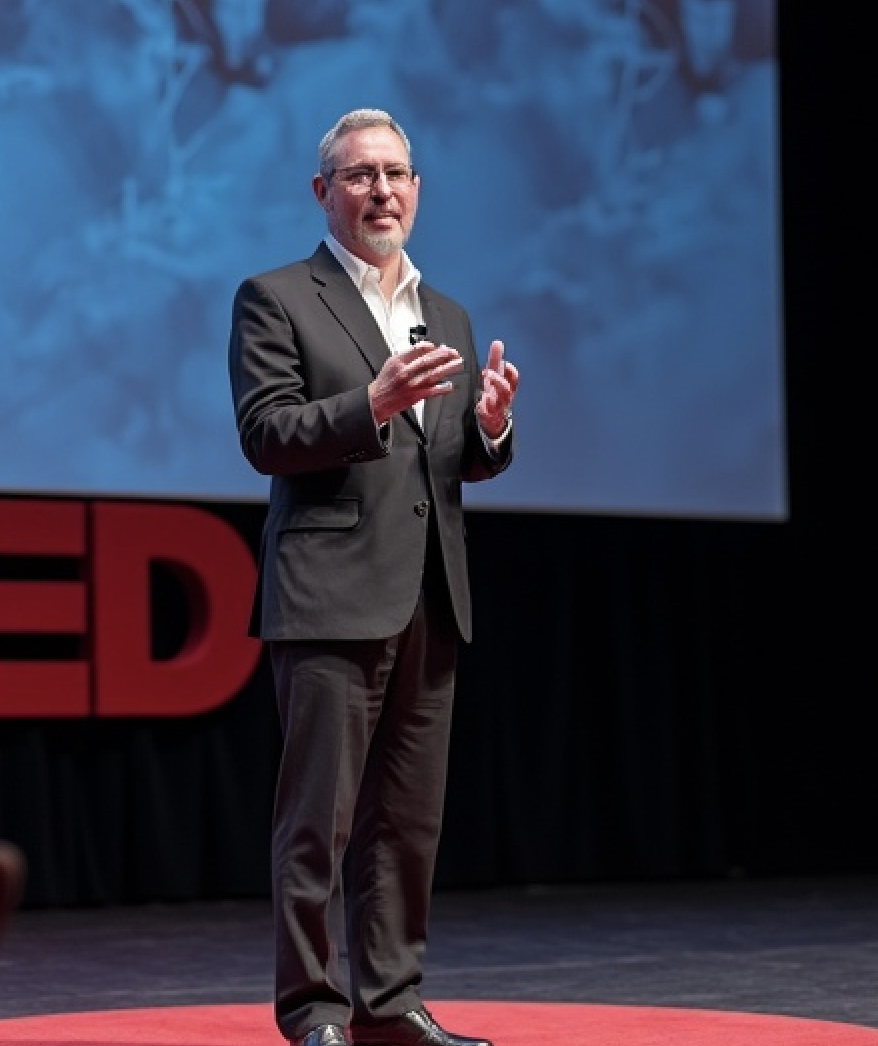
Founder-led strategy. Hands-on execution.
Direct access to Shaun
Senior Judgment Stays in the Loop
You work with Shaun Wilson, founder of ClickIt CMO, throughout the strategy and decision process. Shaun brings 15+ years of digital marketing, SEO, analytics, content, conversion, and leadership experience.
That perspective matters because the right answer is not always “publish more.” Sometimes the problem is proof. Sometimes it is page ownership, technical access, authority, positioning, or a weak next step.ClickIt CMO connects the prompt, the page, the evidence, and the business outcome before recommending a change.
Clear answers
Frequently Asked Questions
What is AI citation optimization?
AI citation optimization strengthens the public pages and evidence that AI-assisted search systems may use when answering buyer questions. It combines buyer-prompt research, canonical-page strategy, visible content improvements, technical clarity, source and entity evidence, internal linking, and repeatable measurement. It does not control or guarantee a third-party answer.
How is the Sprint different from an AI Visibility Audit?
The Audit diagnoses how the business is discovered, understood, represented, cited, and recommended, then prioritizes what to fix. The Sprint takes a focused set of qualified opportunities, maps them to canonical pages, implements approved improvements, and measures the same prompts again. If you do not yet know which gaps matter, begin with the Audit.
Is this the same as generative engine optimization or answer engine optimization?
The labels overlap. GEO and AEO usually describe work intended to improve how a business appears in generated or answer-led search experiences. ClickIt CMO uses AI citation optimization for this focused service because it names the implementation job: identify valuable citation opportunities, strengthen the page and evidence that should support the answer, and retest the result. Established SEO remains the foundation.
Can you guarantee that ChatGPT or Google will cite my business?
No. No provider controls whether an AI system mentions, cites, ranks, or recommends a business. Outputs vary by platform, model, mode, location, account state, time, and run. ClickIt CMO commits to a clear scope, approval process, implementation record, and measurement method, not a third-party result.
Which AI platforms do you test?
The test plan uses current, accessible AI search experiences relevant to the buyer journey and records the exact platform, mode, model information when displayed, date, location, and search state. The panel may include ChatGPT search, Google AI experiences, Perplexity, Copilot, or other relevant systems. A standard baseline uses at least two independent experiences when practical.
Which pages will you optimize?
ClickIt CMO starts with the existing indexable page that best owns the buyer question and conversion purpose. A standard Sprint improves up to five approved canonical pages. A new page is recommended only when the intent is distinct and durable and a cannibalization review shows that an existing page should not own it.
Do we need llms.txt or special AI schema?
Not as a shortcut. Google says llms.txt is ignored and that no special schema or AI text file is required for its AI search features. ClickIt CMO focuses on crawlable, indexable, visible, useful content and accurate structured data that matches the page. Any crawler or schema change must have a documented purpose and pass validation.
How long does it take for AI answers to change?
There is no universal refresh schedule. Search and AI systems discover, process, and use sources on their own timelines. The Sprint establishes a baseline, documents implementation, and schedules 30-day and 90-day retests so early and more durable signals can be compared. Exact project timing depends on access, approvals, page count, and technical conditions.
Can our team implement the recommendations?
Yes. If ClickIt CMO is not authorized to make the live changes, you receive page-level implementation instructions and QA requirements for your developer or content team. No public change is made without approved wording and URL-specific authorization.
How do you know whether the work helped?
We compare the same versioned prompt panel under documented conditions and keep mentions, owned citations, third-party citations, referral traffic, organic performance, and qualified conversions separate. We also review cited domains, answer accuracy, competitor patterns, and page-level performance where the platform provides it. One model response is never presented as a stable ranking.
A responsible next step
Stop Guessing Which Pages AI Systems Need From You
Start with the buyer questions that matter, the pages most capable of answering them, and a measurement record you can defend. ClickIt CMO will review the visible gap, determine whether the Audit or the Sprint is the right next step, and show you what a responsible implementation would require.
Tell us which offers, competitors, or AI Search questions are driving the concern. We will use that context to prepare for the review. Submitting the form does not enroll you in a service or guarantee a citation.